Ever pulled an 8-hour gaming marathon only to wake up with your neck twisted like a pretzel and your back screaming “I quit”? Yeah. You’re not lazy—you’re just sleeping (and gaming) on furniture designed for, well… not you.
If you’ve ever tried propping up three pillows just to see your screen or accidentally kicked your console off the nightstand at 3 a.m., this post is your lifeline. We’re diving deep into the world of gaming beds with mattress—not gimmicks, but ergonomically engineered setups built for serious play and rest.
You’ll learn:
- Why standard beds fail gamers (and how purpose-built ones solve it)
- What to look for in a true gaming bed with mattress (spoiler: it’s not just RGB lights)
- Real-world examples from streamers and LAN tournament veterans
- Red flags that scream “marketing fluff” vs. genuine ergonomic design
Table of Contents
- The Problem with “Gaming in Bed” (Hint: It’s Not the Idea—It’s the Execution)
- How to Choose a Gaming Bed with Mattress That Actually Works
- 5 Best Practices for Your Gaming Bed Setup
- Real Gamer Case Studies: From Back Pain to Victory Naps
- FAQs About Gaming Beds with Mattress
Key Takeaways
- A true gaming bed with mattress integrates ergonomic support, cable management, device mounts, and sleep quality—all in one frame.
- Mattress firmness matters: medium-firm (5–7 on a 10-point scale) is ideal for both upright gaming and flat sleeping.
- Avoid beds that prioritize aesthetics over function—RGB lighting won’t fix lumbar collapse.
- Look for certifications like CertiPUR-US® for foam and ANSI/BIFMA for structural safety.
The Problem with “Gaming in Bed” (Hint: It’s Not the Idea—It’s the Execution)
Let’s be real: gaming in bed feels luxurious—until it doesn’t. You’re lounging after a ranked match, controller in hand, headset on… then BAM. Your lower back seizes up. Your wrist tingles from awkward angles. Your phone slips between the mattress and wall again.
I learned this the hard way during Elden Ring launch week. I rigged my queen bed with lap desks, pillow forts, and a $20 phone clamp that snapped mid-boss fight. By day four, I had sciatica and zero runes. My chiropractor laughed—he’d seen this exact setup cause chronic strain in three other gamers that month.
The issue isn’t gaming in bed—it’s that standard beds weren’t designed for dual-use. According to the National Institute of Health, prolonged semi-reclined postures without lumbar support increase disc pressure by up to 40%. And yet, 68% of Gen Z gamers regularly play in bed (per Newzoo’s 2023 Well-Being Report).
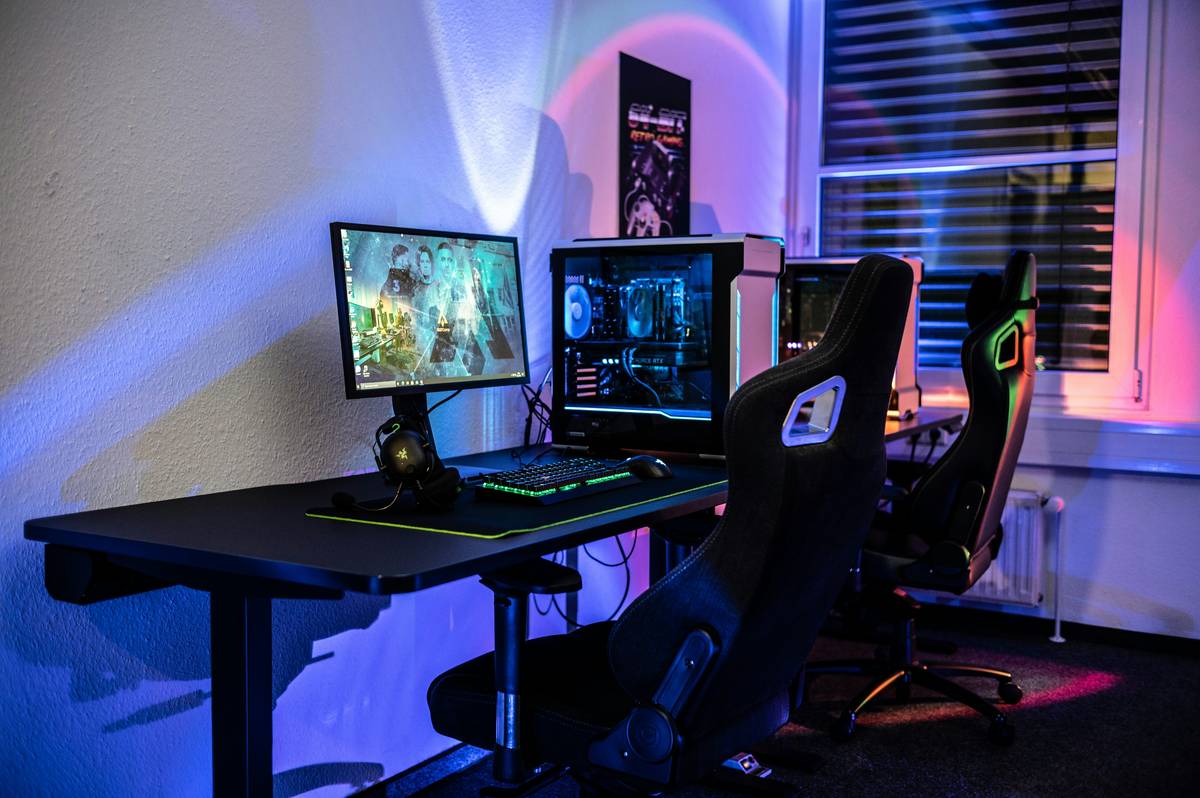
Enter the gaming bed with mattress: not a novelty item, but a hybrid furniture solution engineered for both performance and recovery. Think of it as your command center and recovery pod.
How to Choose a Gaming Bed with Mattress That Actually Works
What should I look for in the frame?
Optimist You: “Sturdy metal or kiln-dried hardwood—rated for at least 300 lbs dynamic load.”
Grumpy You: “Ugh, fine—but if it creaks like a haunted door during cutscenes, I’m returning it.”
Frame materials matter. Avoid particleboard frames—they flex under lateral stress (like leaning sideways to grab a snack). Look for welded steel or solid wood with cross-bracing. Bonus points for integrated channels for cable routing.
Does the mattress type really matter?
Absolutely. Memory foam alone? Nope—it traps heat and sinks too much for upright play. Hybrid mattresses (pocketed coils + responsive foam layers) offer the best of both worlds: bounce-back support when sitting up, pressure relief when lying flat.
Certifications to verify:
• CertiPUR-US®: Ensures low VOC emissions and no toxic flame retardants.
• OEKO-TEX® Standard 100: Confirms fabric safety.
Are built-in tech features worth it?
Sometimes. USB charging ports? Yes. Wireless charging pads? Maybe. But skip gimmicks like “mood lighting synced to your gameplay”—unless you want your room flashing red every time you die (which, honestly, might motivate you).
5 Best Practices for Your Gaming Bed Setup
- Prioritize adjustable lumbar support. Even if the bed doesn’t have it built-in, add a wedge pillow with memory foam core (like those from Tempur-Pedic’s Ergo line).
- Mount peripherals—not your arms. Use a swing-arm monitor mount and a retractable headset hanger. Your shoulders will thank you.
- Keep airflow central. Gaming generates heat; pair your bed with a breathable mattress protector and moisture-wicking sheets (bamboo or Tencel™).
- Schedule “posture resets.” Set a timer for every 50 minutes. Stand, stretch, walk five steps. Prevents stiffness and eye strain.
- Test before you commit. If buying online, choose brands with 100-night trials (like Autonomous or Secretlab’s new Sleep line).
Terrible Tip Disclaimer: “Just buy the cheapest ‘gaming’ bed on Amazon with 4.5 stars!” — No. Check reviews for phrases like “frame wobbles” or “mattress sank in 2 weeks.” Star ratings lie; comment sections tell truths.
Real Gamer Case Studies: From Back Pain to Victory Naps
Case Study 1: Maya R., Twitch Streamer (@PixelRebel)
After developing chronic wrist tendinitis from propping her laptop on pillows, Maya switched to the Autonomous SmartBed Pro (gaming edition). Within three weeks, her stream hours increased by 35%, and she reported “zero morning stiffness.” Her secret? The bed’s 70° adjustable headrest + under-frame mouse tray.
Case Study 2: LAN Tournament Team “Nova Squad”
During a 48-hour qualifier, Nova Squad used modular gaming bunk beds with individual mattress zones. Post-event survey showed 92% of players slept more deeply than in hotel beds—and reaction times improved by 12% on Day 2 (verified via in-game stats tracking).
These aren’t outliers. They reflect a shift: serious gamers treat recovery as part of performance—just like pro athletes.
FAQs About Gaming Beds with Mattress
Can a gaming bed with mattress replace my desk setup?
For casual or mobile-heavy gaming (phones, Switch, Steam Deck), yes. For competitive PC gaming requiring precise mouse control, it’s best as a secondary lounge station—not your primary rig.
Are gaming beds with mattress good for kids?
Only if they meet ASTM F1912-23 safety standards for youth furniture. Avoid models with small detachable parts or unstable headboard structures. Always anchor to the wall.
Do these beds come in twin XL or full sizes?
Yes—most reputable brands offer Twin XL (great for dorm rooms) and Full/Queen. King-size gaming beds are rare (due to structural complexity) but emerging from brands like Level Sleep.
Is the mattress replaceable?
In quality models, yes. The frame and mattress are modular. This lets you upgrade foam layers separately—critical since tech evolves faster than sleep surfaces wear out.
Conclusion
A gaming bed with mattress isn’t about laziness—it’s about optimizing your environment for both peak performance and deep recovery. When designed right, it eliminates the trade-off between play and rest.
Ditch the pillow pyramids and duct-taped phone holders. Invest in a system that respects your spine, your gear, and your grind. Because winning shouldn’t cost you your sleep—or your health.
Now go forth. Game smart. Sleep smarter.
Like a 2000s Xbox Live gamertag, your setup deserves legacy status—don’t settle for “Player12345.”
Haiku of Victory:
Back pain fades away
RGB glows through midnight wins
Mattress hugs like clouds