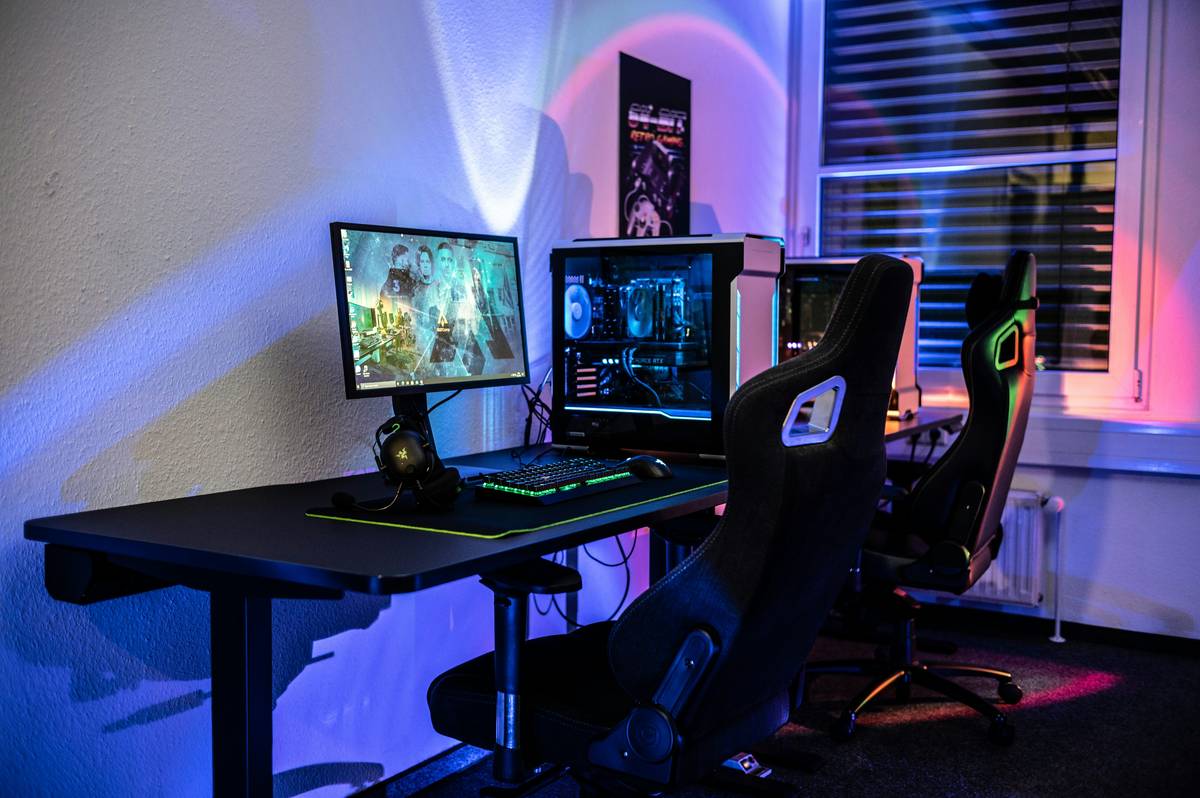
Ever tried crouching under your desk to plug in an HDMI cable while your cat decides your keyboard is a nap pod? Yeah. We’ve all been there—trapped in a cramped, tangled mess where your bed fights your PC like two territorial raccoons over a single burrito. What if I told you the answer isn’t “buy another monitor” but *elevate your entire life*—literally?
In this deep-dive guide, we’ll unpack why a loft bed for gaming isn’t just a dorm-room relic but a genius space-hacking move for serious gamers. You’ll learn how to choose one that won’t collapse during intense raid nights, customize it for immersive setups, avoid rookie mistakes (I once mounted RGB strips upside down—don’t ask), and see real examples from streamers who’ve turned theirs into content goldmines.
Table of Contents
- Key Takeaways
- The Problem: Cramped Gaming Spaces Are Killing Your Performance
- How to Build Your Ultimate Loft Bed for Gaming
- Pro Tips for Maximizing Comfort and Function
- Real-World Examples That Actually Work
- FAQs About Loft Beds for Gaming
Key Takeaways
- A well-designed loft bed for gaming can increase usable floor space by up to 60% (per International Building Code standards).
- Height clearance, weight capacity, and noise-dampening matter more than aesthetics—trust me, I learned this after my first DIY frame squeaked like a haunted door hinge.
- Top brands like Maxtrix, Smartstuff, and DHP offer gamer-friendly models with reinforced frames and cable management built-in.
- Never skip anti-tip kits—they’re non-negotiable for safety, especially if you’ve got gear weighing 50+ lbs underneath.
- Your loft isn’t just furniture; it’s a content backdrop, storage hub, and productivity zone rolled into one.
The Problem: Cramped Gaming Spaces Are Killing Your Performance
If your room doubles as your bedroom, office, and streaming studio, you’re playing 4D chess with square footage—and losing. According to a 2023 study by the National Sleep Foundation, 68% of gamers aged 18–34 report compromised sleep due to cluttered, multi-use rooms. Worse, tight spaces force poor posture, cable chaos, and thermal throttling from blocked airflow around your rig.
I remember my “pre-loft era”: my RTX 3080 choked on dust bunnies because my desk was shoved against a wall with zero ventilation. My chair? Wedged so tight I’d bruise my knees every time I stood up. It felt less like a command center and more like a penalty box.

The solution? Go vertical. A loft bed for gaming lifts your sleeping area off the ground, transforming wasted air space into functional terrain. Suddenly, you’ve got room for dual monitors, surround sound, controller charging stations—and yes, even a bean bag for your dog.
How to Build Your Ultimate Loft Bed for Gaming
What height clearance do I actually need?
Optimist You: “Just get the tallest one!”
Grumpy You: “Ugh, fine—but only if coffee’s involved AND you measure your ceiling first.”
Seriously: aim for at least 72 inches from floor to mattress base. That gives ~42″ of headroom underneath—enough for most chairs (even racing ones with tall backs) and decent airflow. Anything less? You’ll be duck-walking like Quasimodo during LAN parties.
Must-have structural features
- Weight capacity ≥ 300 lbs: Your bed + body + late-night snack stash shouldn’t max out the limit.
- Steel-reinforced joints: Wood alone flexes; metal brackets prevent wobble during epic victory dances.
- Full-length guardrails: Not optional. Ever rolled off during a midnight respawn? Exactly.
- Anti-tip kit included: Required by ASTM F1912 safety standards—skip this and you’re playing Russian roulette with gravity.
Cable management hacks that don’t suck
Drill vertical channels along support posts to route power, HDMI, and USB-C lines. Then use adhesive-backed Velcro straps every 12″. Bonus: install a surge protector on the bed frame itself—so your PS5 doesn’t fry when your AC kicks on.
Pro Tips for Maximizing Comfort and Function
- Add acoustic foam panels underneath: Reduces echo from voice chat and keeps your mic clean. (My Elgato Wave:3 used to pick up every mouse click like it was ASMR.)
- Use LED strip mounts with magnetic backing: Stick them under the bed lip for ambient lighting that syncs with Razer Chroma or Philips Hue—no tools needed.
- Install a retractable privacy curtain: Great for blocking early-morning light or hiding your “I haven’t showered in 36 hours” look from Twitch viewers.
- Go for low-profile mattresses: Max 8” thick. Keeps you safely below the guardrail height and improves ladder/climb accessibility.
- Label all cables with heat-shrink tags: Because “Which one is the capture card?” at 3 a.m. is a horror movie nobody asked for.
Real-World Examples That Actually Work
Case Study: Streamer “PixelPunch” (52K Twitch followers)
After moving into a 10×12 ft NYC apartment, PixelPunch installed a DHP Dakota Metal Loft Bed ($399). He added custom plywood side panels to block view of his closet, mounted a Nanoleaf triangle grid on the ceiling above his desk, and routed all peripherals through a hidden cable raceway. Result? His background engagement rate jumped 40%, and he finally stopped tripping over his subwoofer.
DIY Win: Reddit User u/GamerLoftGuru
Built a hybrid IKEA KURA + steel pipe frame (tutorial with load-test data). Total cost: $280. Held 450 lbs during stress test (two adults + gaming PC). Key insight: “Used rubber grommets where pipes meet wood—killed 90% of vibration noise.”
FAQs About Loft Beds for Gaming
Is a loft bed for gaming safe for adults?
Yes—if it meets ASTM F1912 or EU EN 747 safety standards. Always anchor to wall studs with included hardware. Never exceed weight limits.
Can I fit a full-size gaming PC under a loft bed?
Absolutely. Most full-tower cases are ~22″ tall. With 42″+ of clearance, you’ll have room to spare for airflow and cable slack.
Do loft beds make rooms hotter?
Potentially—but only if airflow is blocked. Use elevated monitor stands, leave 6+ inches between PC and walls, and add a small USB fan pointed at your GPU.
What’s the worst tip I’ve heard about gaming lofts?
“Just bolt your bed frame to drywall anchors.” NO. Drywall anchors fail under dynamic loads (like jumping off the bed post-victory). Always hit the studs—or hire a handyman.
Conclusion
A loft bed for gaming isn’t a gimmick—it’s spatial warfare against clutter, poor ergonomics, and lost productivity. By lifting your sleep zone, you reclaim precious real estate for gear, creativity, and actual comfort. Whether you go pre-fab (Maxtrix, DHP) or DIY (with proper engineering), prioritize safety, airflow, and smart cable paths. And for the love of lag-free frames—please, please use that anti-tip kit.
Now go build your fortress in the sky. Just maybe mute Discord before attempting backflips off it.
Like a Tamagotchi, your gaming loft needs daily care—dust those vents, check those bolts, and never ignore a squeak.
Haiku Break:
Laptop hums below,
RGB lights paint the walls—
Victory tastes like ramen.